Exterior
Aircraft Wet Washing
A wet wash is the thorough reset for an airframe: aviation-approved detergent, hand agitation panel by panel, and a controlled low-pressure rinse. It is the method for aircraft carrying genuine contamination — exhaust carbon, oil film, de-icing residue, winter grime — that waterless methods cannot lift.
It is also where technique matters most. Water and airframes need managing: sensors protected and flagged, water kept out of joints and hinges, and drying done with care. That discipline is the difference between a wash that protects an aircraft and one that quietly damages it.
Suitable for
- Private Owners
- Flying Schools
- Charter Operators
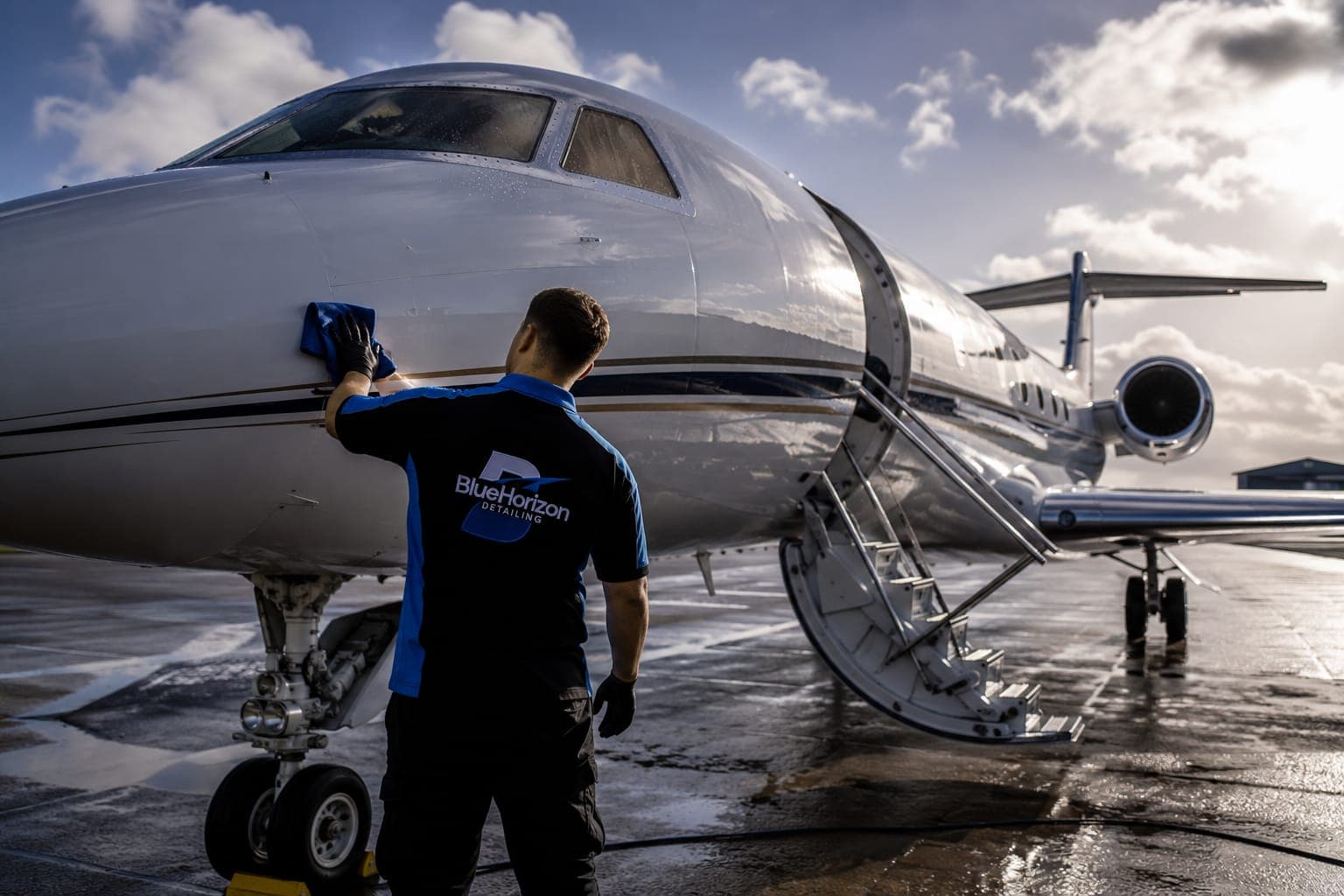
How we wet wash an aircraft
Preparation first: pitot probes, static ports and vents are covered and flagged, with a checklist ensuring every cover fitted is removed at completion. Washing works methodically around the aircraft with soft media and aviation detergent, refreshed constantly so grit is never dragged across paint.
The belly and gear receive targeted degreasing — the exhaust track, breather streaks and brake dust need chemistry and dwell time, not force. Rinsing is gentle and directional: never driven at hinge lines, seals, bearings or sensor areas, and never from a pressure washer. Drying finishes the job properly, including the seams and shadow areas where water lingers.
De-icing boots, TKS panels, brightwork and fabric or classic surfaces each get an adapted regime — the aircraft dictates the method, not the other way round.
Why no pressure washing — ever
Driven water strips paint from rivet heads and panel edges, forces moisture into lap joints and control bearings, and can flood static systems — the kind of damage that costs far more than a proper wash. Every reputable maintenance reference says the same thing. Hand washing takes longer; it is also the only professional answer.
Why it matters
What this service gives you
Genuine decontamination
Removes the oil, carbon and chemical residue that dry methods leave behind.
Corrosion protection
Clears salts and de-icing fluid from skin, seams and gear — where corrosion actually starts.
The right preparation
The required first step before paint enhancement, correction or protective coatings.
Disciplined process
Sensor protection with cover-off verification, controlled rinsing and thorough drying as standard.
Questions
Wet Washing — questions answered
Where can a wet wash be carried out?
It depends on the airfield — wet washing needs a location where wash water can be managed appropriately, such as a wash area or suitable apron. Where your field restricts run-off we'll advise honestly, and often combine an off-site or designated-area wet wash with on-site dry-wash maintenance.
Do you protect pitot and static ports?
Always. Sensors and vents are covered and flagged before washing begins, and a cover-on / cover-off checklist is completed so nothing is left in place at handback — a small discipline that matters enormously.
How long does a wet wash take?
A light single typically takes half a day including degreasing and drying; twins, turboprops and jets take longer with size and contamination. Exact timing comes with your quotation.
Related
Services that pair with this one
- Exterior Aircraft DetailThe complete exterior service: inspected, washed by the safest appropriate method, finished nose to tail — you never have to choose how.Explore →
- Dry WashingWaterless exterior cleaning — the right method for routine maintenance washes and for airfields where water or drainage isn't available.Explore →
- Paint CorrectionMulti-stage defect removal for paint that needs more than a polish — carried out with the restraint thin aircraft topcoats demand.Explore →
- Paint Enhancement & ProtectionGloss brought back by machine, then locked in — polymer sealant or long-term coating chosen to suit your aircraft, not sold separately.Explore →
Ready to book wet washing?
Tell us the type, where it's based and what you need. We'll come back promptly with a clear, honest quotation.