Protection & Enhancement
Aircraft Brightwork Polishing
Brightwork — the unpainted, polished aluminium an aircraft wears on leading edges, engine inlet lips, spinners and trim — oxidises steadily from the moment it is last polished. Dull, hazed metal drags down the presentation of an otherwise excellent aircraft; a genuine mirror finish transforms it.
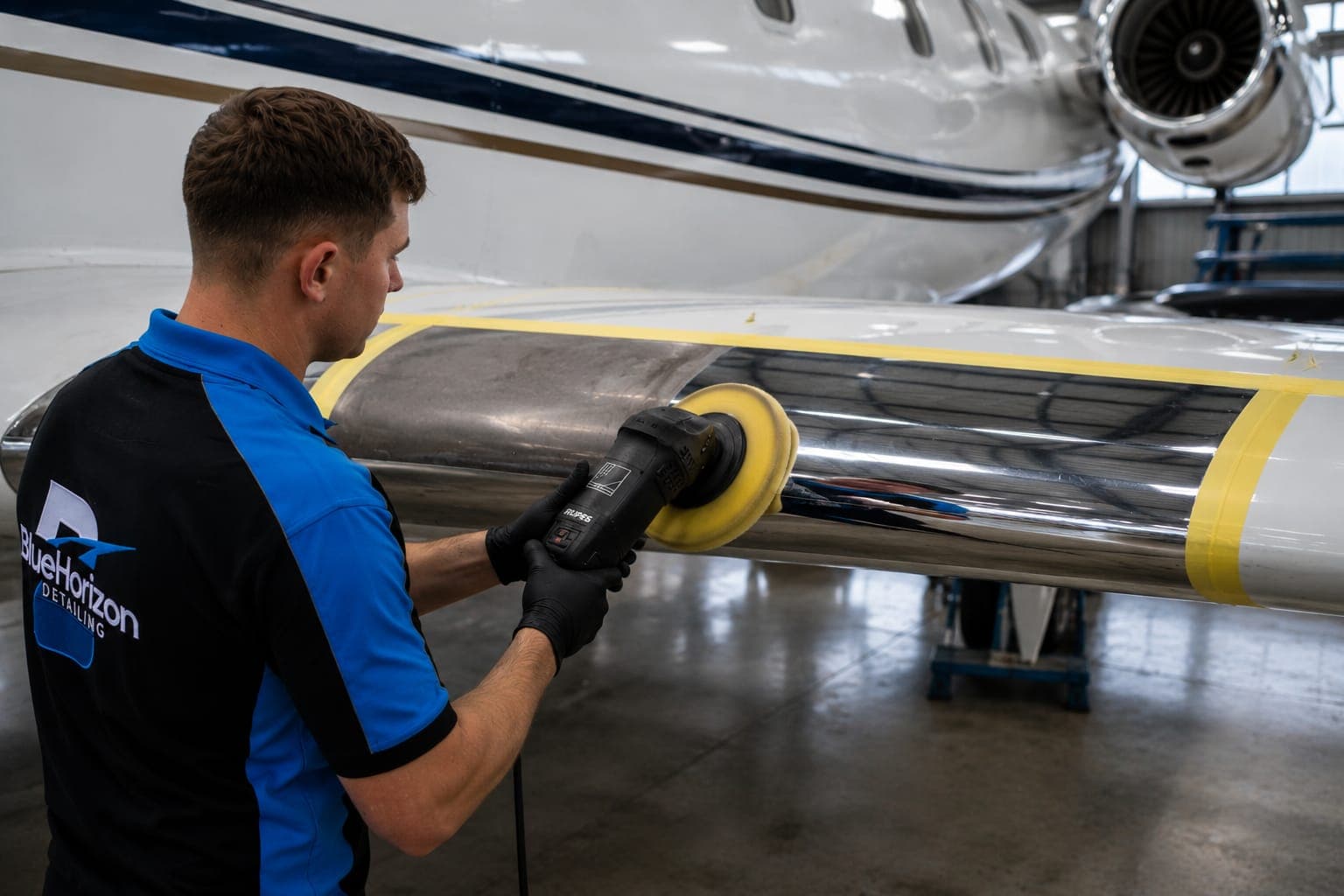
Restoring brightwork properly is graded, patient machine work: heavier cutting compounds where oxidation demands it, stepped down through progressively finer grades to a swirl-free mirror. It is one of the most skilled jobs in aircraft appearance care, and one of the most satisfying to see finished.
The process
Assessment establishes what the metal needs: light oxidation may polish out with fine grades, while neglected or weathered brightwork needs a staged approach beginning with cutting compounds. Work proceeds with appropriate machines and clean media, panel by panel, with surrounding paint masked and protected throughout.
We use graded aviation metal-polishing systems — the compound families developed specifically for aircraft aluminium, conforming to metal-polish specifications such as AMS 1650 — finishing with grades fine enough to leave true clarity rather than a bright haze. As an optional extra, a protective coating (we use Xzilon X20, an aerospace coating) can then slow re-oxidation and keep the restored finish beading between visits.
Where brightwork appears
Classic King Airs and older Cessnas and Beechcraft carry polished leading edges; many types wear polished spinners and inlet lips; and fully polished vintage airframes are their own discipline, which we scope and quote individually. Because leading edges live next to de-icing boots, sensors and erosion strips, the no-touch zones matter as much as the polished ones — masking and protection are part of the craft.
Why it matters
What this service gives you
True mirror finish
Graded polishing to genuine clarity — not a one-pass shine that hazes back in weeks.
Specification products
Aviation metal-polish systems appropriate to aircraft aluminium.
Protected surroundings
Paint, boots and sensors masked and respected throughout.
Slower re-oxidation
Optional protective treatment keeps the finish brighter for longer.
Questions
Brightwork Polishing — questions answered
How often does brightwork need polishing?
Flown aircraft typically need attention two to four times a year to hold a mirror standard, depending on exposure and whether a protective treatment is applied. We can schedule this within a maintenance programme so the finish never slides backwards.
Can badly oxidised metal be recovered?
Usually, yes — heavier oxidation simply needs more aggressive starting grades and more time. Genuine corrosion pitting is a different matter: polishing improves its appearance but metal condition is an engineering question, and we'll flag anything that needs an engineer's eye.
Do you polish around de-icing boots safely?
Yes — boots, erosion strips and sensors are masked and excluded. Polishing compounds and machines never touch rubber de-icing surfaces, which have their own dedicated care regime.
Related
Services that pair with this one
- Paint EnhancementSingle-stage machine polishing that restores gloss to tired, oxidised paint — measured, conservative and honest about what your paint can take.Explore →
- Exterior Aircraft CleaningThorough, airframe-safe exterior washing that removes exhaust film, oil streaks and contamination — protecting paint and helping control corrosion.Explore →
- Ceramic ProtectionDurable, hydrophobic protection that keeps polished paint at its best — with straight answers on ceramics, sealants and what suits your aircraft.Explore →
Ready to book brightwork polishing?
Tell us the type, where it's based and what you need. We'll come back promptly with a clear, honest quotation.