Aircraft Types
Helicopter Cleaning & Detailing
Helicopters get dirty in ways fixed-wing aircraft don't. Rotor heads sling grease in a fine radial film across the cabin roof and engine cowlings; turbine exhaust paints the tailboom with soot; skids scuff and gather grime from every off-airfield landing site. A helicopter that looks clean at eye level is often carrying its real contamination where only a step-ladder shows it.
Rotorcraft also carry the strictest no-touch zones in aviation appearance work: pitch links, rotor-head componentry, blade tip caps and bonded strips are engineering territory. We clean what should be cleaned, mask and avoid what shouldn't, and treat blades strictly within manufacturer limits.
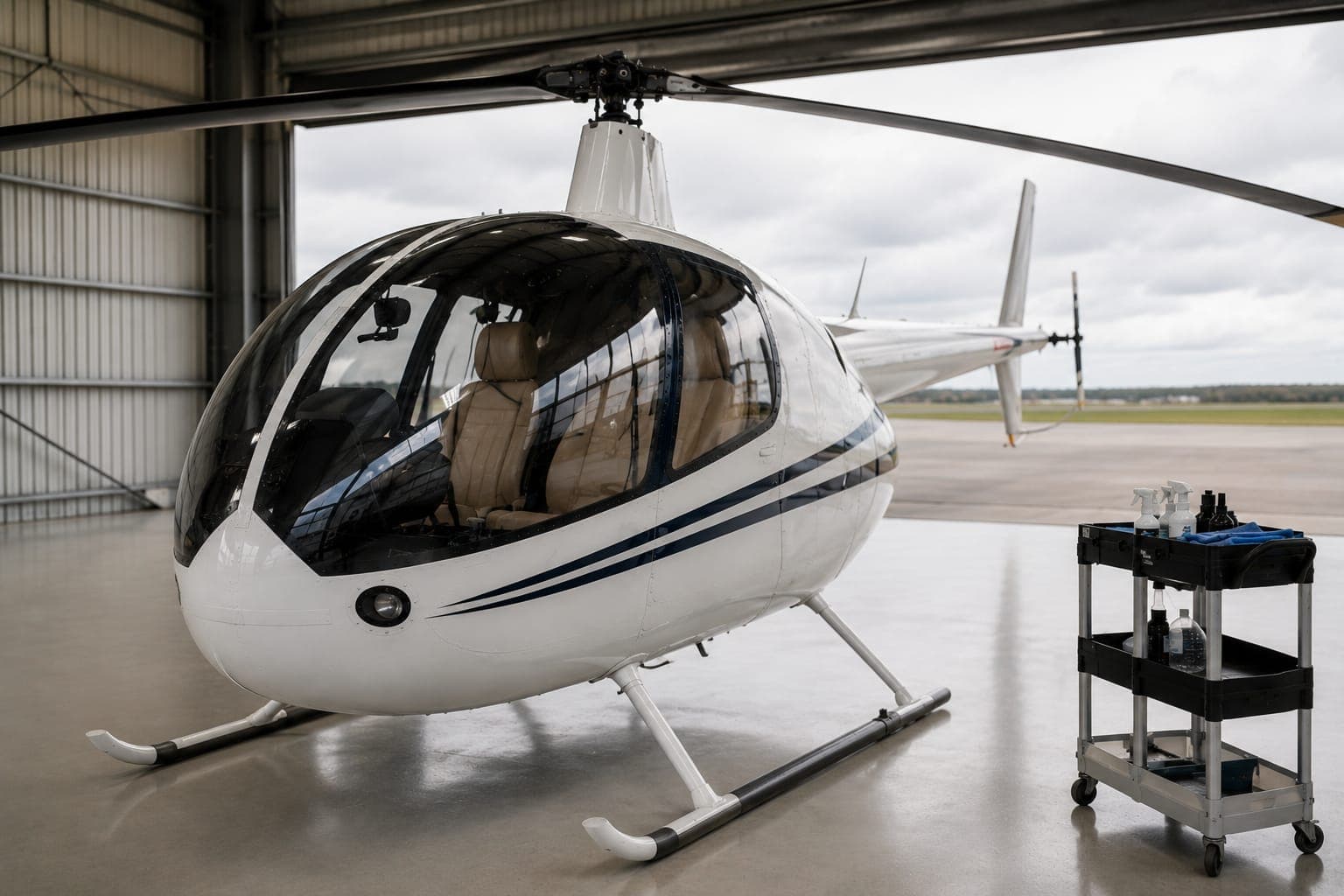
Aircraft in this category include
- Robinson R22, R44 & R66
- Airbus H125 & H135
- Bell 206 & 407
- Leonardo AW109
- Guimbal Cabri G2
Typical services
What helicopters usually need
What we're up against
Common contamination
Rotor-head grease sling
A fine radial spray across roof and cowlings that needs degreasing chemistry — and a ladder — to remove properly.
Turbine soot
Turbine types (R66, H125, AW109) stream exhaust carbon down the tailboom; it shows badly and etches if neglected.
Landing site residue
Grass, mud and dust from off-airfield sites accumulate on skids, steps and lower panels.
Our recommendations
Keeping this category at its best
- Roof-down washing on a regular cycle — a clean helicopter viewed from a hangar floor may not be clean at all.
- Blades cleaned strictly per manufacturer limits; blade condition and erosion-strip issues flagged to your engineer, never worked around.
- No-touch zones respected absolutely: pitch links, rotor-head parts and bonded strips are not appearance surfaces.
- Corporate machines: cabin detailing between charter work keeps the passenger impression consistent.
Questions
Helicopters — questions answered
Do you clean rotor blades?
Only within manufacturer limits — typically gentle cleaning of blade surfaces with appropriate products, and nothing at all on tip caps, bonded strips or erosion-protection without engineering involvement. Anything questionable gets flagged, not polished over.
Can you clean at private landing sites?
Usually, yes — helicopters often live away from airfields, and waterless dry-wash methods make garden, estate and rooftop sites workable. Site access and method are agreed as part of the quotation.
How often should a helicopter be washed?
Working machines benefit from washing every few weeks — turbine soot and grease sling build quickly, and both are far easier to remove fresh. A scheduled programme keeps it painless.
Services
Popular services for helicopters
- Exterior Aircraft DetailThe complete exterior service: inspected, washed by the safest appropriate method, finished nose to tail — you never have to choose how.Explore →
- Interior Aircraft DetailEvery material in the cabin — leather, carpet, belts, glazing, trim — cleaned as one complete package, finished to boarding standard.Explore →
- Aircraft Transparency CareRestoration for windscreens, cabin windows and canopies — fine scratches reduced, haze cleared, optical clarity genuinely improved.Explore →
- Paint Enhancement & ProtectionGloss brought back by machine, then locked in — polymer sealant or long-term coating chosen to suit your aircraft, not sold separately.Explore →
Operating helicopters? Let's talk.
Tell us the type, where it's based and what you need. We'll come back promptly with a clear, honest quotation.