Interior
Aircraft Leather Cleaning & Conditioning
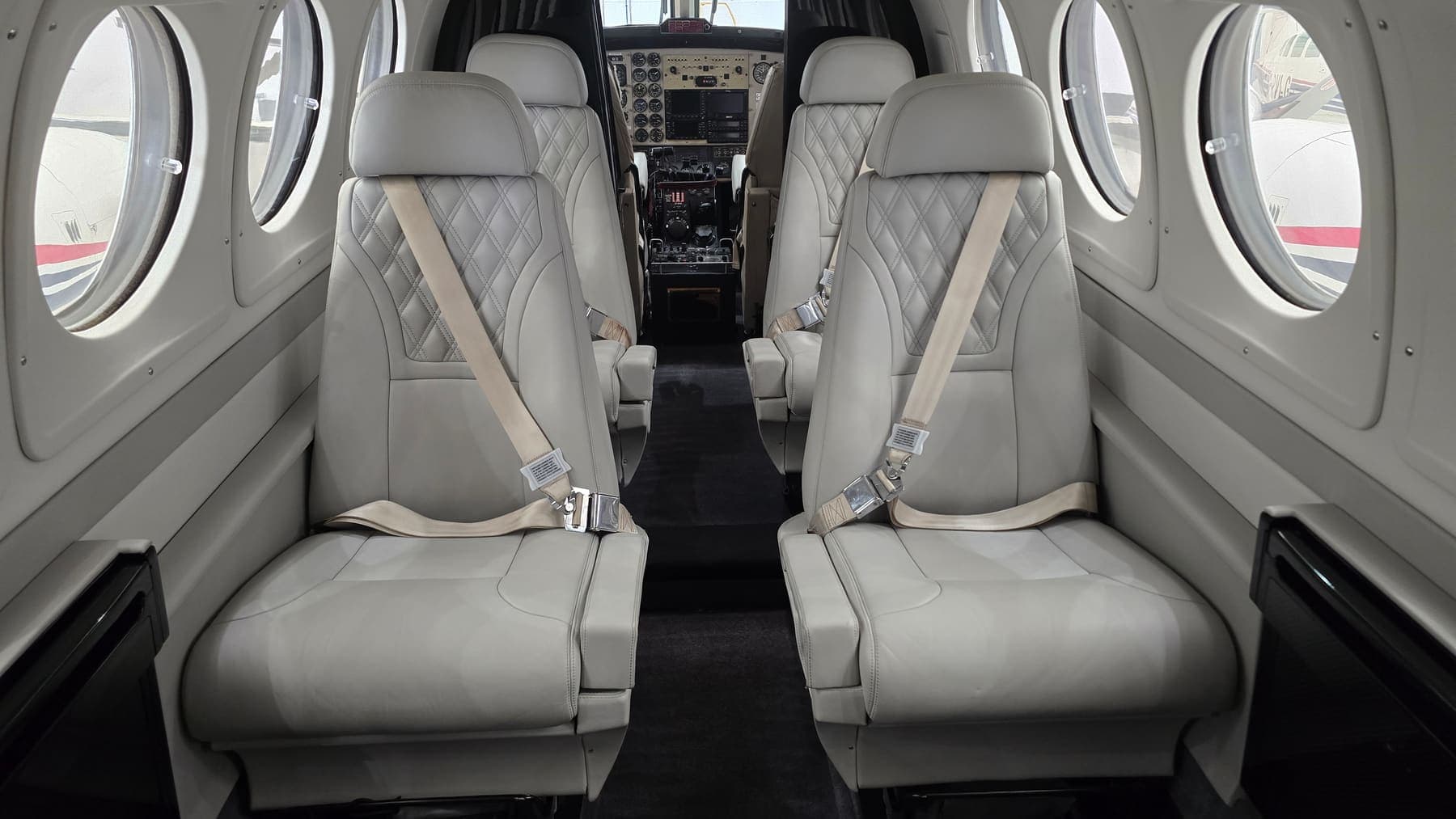
Leather is the surface passengers actually touch, and in an aircraft it works harder than in any car: compressed by harnesses, scuffed by entry and exit over the wing or sill, dried by cabin sun through large transparencies. Left uncleaned and unconditioned, it greys, stiffens and eventually cracks — and cracked leather is a retrim, not a detail.
Aviation leather also differs in one way that matters: it carries fire-retardant treatments that the wrong chemistry can degrade. Our process uses pH-appropriate leather cleaners and conditioners suitable for aircraft interiors — never harsh solvents, and never the quaternary disinfectants that attack those treatments.
Suitable for
- Private Owners
- Business Jets
- Charter Operators
The process
Seats are vacuumed and dusted first, then cleaned methodically with a suitable leather cleaner, soft brushes and controlled moisture — working seams, bolsters and headrests where grime actually gathers. Ingrained soiling (denim dye at the bolsters, hand oils on armrests, harness scuffing) is treated patiently rather than scrubbed.
Clean leather is then conditioned to restore suppleness and guard against drying, using products that leave a natural finish — cabins should feel cared for, not sit glossy and slippery. Perforated and ventilated hides get appropriately restrained product use.
Honest expectations
Cleaning recovers a great deal: most greying, soiling and light scuffing lifts impressively. What it cannot do is reverse cracking, worn-through colour or dye damage — those need a leather specialist's repair or a retrim, and we'll tell you which honestly during assessment.
Why it matters
What this service gives you
Materially longer seat life
Conditioned leather resists the drying and cracking that force retrims.
Treatment-safe chemistry
Products chosen to respect aviation leather's fire-retardant finish.
Natural result
Clean, supple and matte — never sticky or glossy.
Cabin-wide care
Seats, side panels, yoke and trim leather all covered.
Questions
Leather Cleaning — questions answered
What do you use on aircraft leather?
pH-appropriate leather cleaners and conditioners suitable for aviation interiors, applied with soft brushes and microfibre. We avoid solvent-heavy products and quaternary disinfectants, which can strip colour and degrade fire-retardant treatments.
Can you remove dye transfer and scuffs?
Light transfer and surface scuffing usually improve significantly. Deep-set dye, cracking or worn-through colour are repair jobs rather than cleaning jobs — we'll identify the difference honestly rather than over-promise.
How often should aircraft leather be conditioned?
Two to four times a year for aircraft in regular use, more where cabins sit in strong sun. Little and often beats occasional heavy treatment — which is why leather care slots naturally into scheduled programmes.
Related
Services that pair with this one
- Interior Aircraft DetailEvery material in the cabin — leather, carpet, belts, glazing, trim — cleaned as one complete package, finished to boarding standard.Explore →
- Carpet CleaningDeep carpet cleaning and extraction with drying managed properly — because moisture left under a cabin floor is never acceptable.Explore →
- Seat Belt CleaningBelts and harnesses cleaned with webbing-safe methods — the detail that quietly signals how well an aircraft is kept.Explore →
Ready to book leather cleaning?
Tell us the type, where it's based and what you need. We'll come back promptly with a clear, honest quotation.